what to check when your knee keeps aching
KLOW peptide: what early repair findings mean for you
Your knee can ache long after the day's work ends. KPV, GHK-Cu, BPC-157 and TB-500 each have separate research, with different limits. Those findings haven't shown that the mixture would help your knee. Your safety with the mixture needs proof, too.

What pain relief claims need to show you
An ache that spoils your sleep makes relief sound welcome. KLOW peptide combines KPV, GHK-Cu, BPC-157 and TB-500 for research. Your body builds protein (material for growth and repair) from amino acids, tiny parts found in food. Peptides are shorter strings of those parts, like beads joined together.
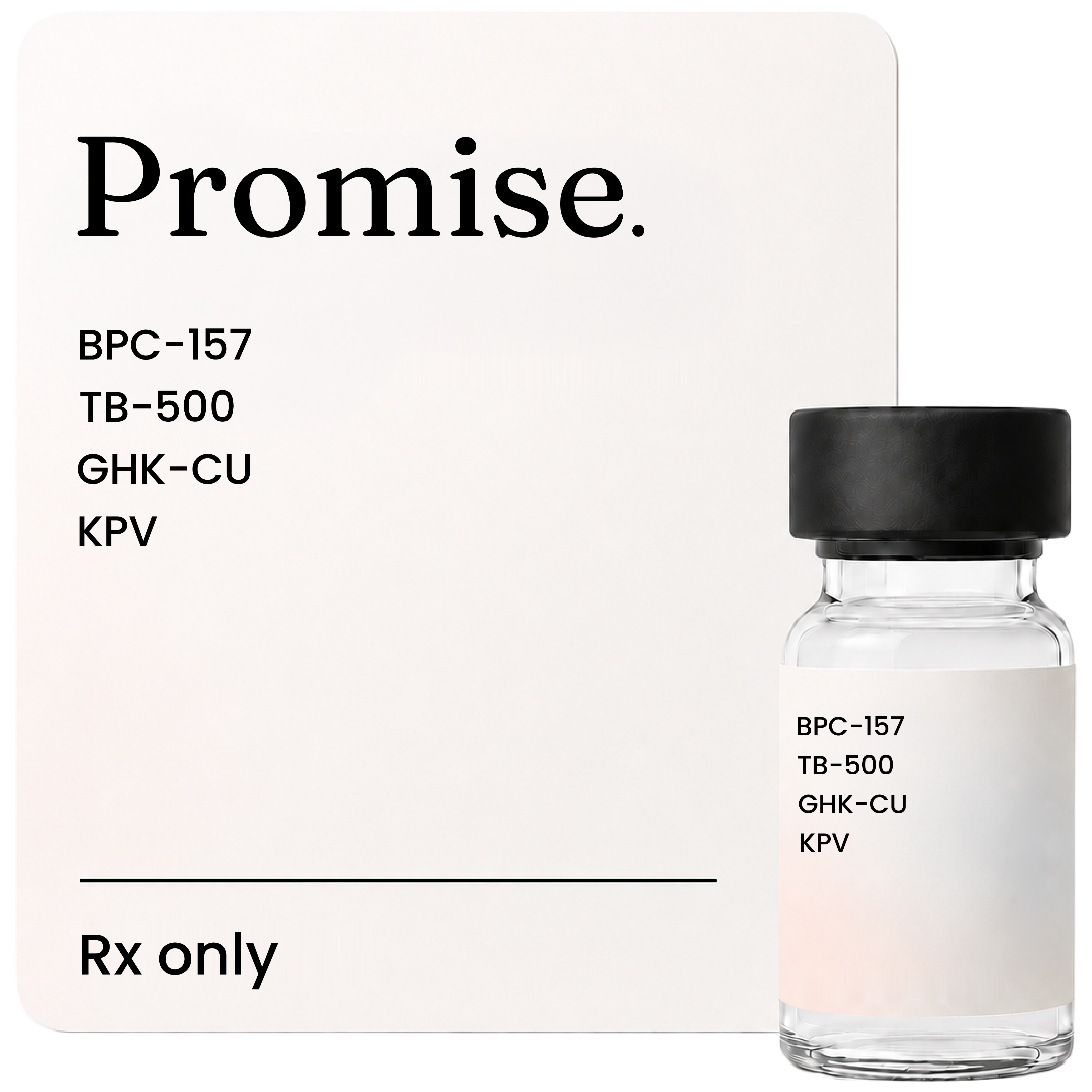
A vial (small glass bottle) holds 80 mg in all. The letters mean milligrams, a measure of weight. About 50 mg of the contents is GHK-Cu. The rest is 10 mg BPC-157, 10 mg TB-500 and 10 mg KPV, without FDA drug approval.
Separate ingredients improved repair or reduced inflammation in early tests. Most tested animals or used cells in dishes, without treating your symptoms. The few human studies also used ingredients on their own. Those studies don't show what the combined ingredients would do for you.
On KLOW effects, people describe using the mixture themselves for research. The accounts don't say whether a doctor watched over them. Nobody checked those changes in a trial comparing different treatments. You can't know from those accounts whether the mixture caused relief.
What is KLOW peptide doing in the same bottle?
The dry contents of the usual bottle weigh 80 mg. GHK-Cu weighs 50 mg, and BPC-157 weighs 10 mg. TB-500 weighs 10 mg, with another 10 mg of KPV. Water makes a liquid mixture, but doesn't turn those ingredients into a new substance.
KPV eased inflammation (the body's response to injury or infection) in mice and cells in dishes [3]. That response can cause heat, swelling and pain. With GHK-Cu, cells produced collagen (protein strengthening your skin) and other supporting material [4][5]. Those cell tests didn’t show healing of an injury like yours.
Copper in GHK-Cu helps the body make collagen stronger. GHK-Cu makes up about 62.5% of the contents by weight. That larger share doesn't prove a larger healing benefit. Your body would receive the other ingredients alongside the copper.
BPC-157 stands for Body Protection Compound 157. The substance copies a protein section present in stomach fluid. Studies found better tendon repair and growth of new blood vessels [2][9][10][11]. Your tendon connects muscle with bone and helps you move.
TB-500 copies a small piece of thymosin beta-4, a protein already found in the body [1]. The full protein helps cells reach a wound during healing. Most wound studies gave animals that full protein. The small copied piece hasn't shown all the same effects.
KLOW: what putting the ingredients together doesn't prove
The name KLOW tells you that the ingredients share a bottle. Each ingredient still has its own effects and unknowns. Mixing doesn't prove that the ingredients help one another. It also doesn't settle your chance of harm.
You don't have comparisons of combined ingredients with ingredients given alone. Tests against smaller mixtures are missing, too. So are tests against placebo (care given without the substance being studied). You can't judge combined treatment from separate findings about repair.
KLOW blend: what improved before the ingredients were combined
BPC-157 improved repair of rats’ completely cut Achilles tendons [2]. That tendon links your heel and the muscles above it. The repaired tendons took more force, and rats moved better. Belly shots gave separate rat groups 10 millionths, 10 billionths or 10 trillionths of a gram each.
BPC-157 also helped rat tendons reattach to bone [9] and knee ligaments heal [10]. Ligaments keep bones joined and help steady your knee. Tendon cells grew and survived better in dishes [11]. Those separate experiments didn’t test your repair or your safety with combined ingredients.
Whole thymosin β4, the body protein partly copied in TB-500, improved rat wounds. New skin coverage rose 42% at 4 days and up to 61% at 7 days. Salt-water treatment provided the comparison with the full protein. Researchers placed the protein on wounds or gave belly shots.
By day 7, wound shrinkage was at least 11% greater. Wounds gained collagen (protein strengthening skin) and newly formed blood vessels. Skin cells given 10 trillionths of a gram in dishes showed 2–3-fold more movement [1]. Two to three times as many cells moved, without showing your wound healing with short TB-500.
KPV reduced inflammation in mice’s bowels after treatment by mouth [3]. Human cells in dishes also released fewer inflammation-driving substances. Those cell tests didn’t treat patients with bowel symptoms. Your bowel response to the mixture remains unknown.
GHK-Cu skin treatment increased collagen production in 70% of women. The shares were 50% with vitamin C and 40% with retinoic acid, which is a skin medicine related to vitamin A. These percentages count women with increases, without measuring each increase’s size. You can’t read your chance of injury repair from those counts.
GHK becomes GHK-Cu when copper joins the substance. At age 20, blood held about 200 nanograms per milliliter (tiny weights in much less liquid than a teaspoon). Blood GHK was about 80 nanograms per milliliter in people aged 60 [4]. That fall doesn’t show what happened to anyone’s healing.
KLOW peptide blend: what still needs a test of its own
Individual ingredients improved repair or eased inflammation in separate tests. Those improvements give reasons to investigate the ingredients together. They don’t prove your benefit from the complete mixture. You lack a comparison showing both recovery and harm after combined treatment.
KLOW peptide benefits: what the separate treatments improved
Better repair in animals is the strongest finding for some ingredients. The catch is that those animals didn't receive the mixture. First, find which ingredient researchers gave before judging your options. Then ask whether patients with your kind of injury received treatment.
BPC-157 improved rats' Achilles tendons [2], tendon attachment to bone [9] and knee ligaments [10]. Tendon cells also survived and grew better in dishes [11]. Rats with severe pancreas inflammation had less damage to other organs [15]. Your pancreas helps digest food and control blood sugar.
Whole thymosin β4 helped new skin cover rats' wounds faster. Coverage rose +42% at 4 days and +61% at 7 days [1]. Wounds also shrank more and gained collagen, the protein strengthening repaired skin. The rats weren't given the shorter TB-500 used in KLOW.
Mice's bowels and gut cells grown in dishes showed less inflammation after KPV [3]. Treated gut cells released less material that drives the inflammation response. The cells came from people, but weren't tested inside patients. Your bowel relief from combined ingredients remains untested.
GHK-Cu improved skin firmness and fine wrinkles in skin studies [4][5]. Treated cells also produced more skin-supporting material, including collagen. Other changes concerned DNA (the material holding a cell's instructions) and protection from damage. You can’t predict your injured knee’s repair from those early findings.
People using the mixture for research describe relief on KLOW effects. Those people weren't enrolled in a trial comparing different care. A trial hasn't established why those users felt better. You can't use those reports to predict your own recovery.
What the small safety study left unanswered
Two healthy adults received BPC-157 through a vein in 2025 [6]. The tested weights were 10 mg and 20 mg. Safety checks found no side effects or changes in heart, liver or kidney tests. Your thyroid helps control the body’s pace, and thyroid and blood sugar checks stayed unchanged.
The study didn't test your safety with the mixture. The test of BPC-157 involved only 2 adults. Such brief checks can't show what years of use might do. Those adults didn't receive all the ingredients together.
TB-500 matters if your sport tests for banned drugs. WADA sets the rules for sports drugs and bans thymosin beta-4. That body protein is the source of the copied piece called TB-500. The ban applies during events and between events.
New blood-vessel growth raises concern if you've had cancer. BPC-157, whole thymosin beta-4 and GHK-Cu encouraged new vessels in studies, while the shorter ingredient hasn’t proved every thymosin beta-4 effect. Tumors need blood vessels to keep growing. This raises a possible concern for you, without proving cancer harm in people.
Your doctor can weigh these unknowns alongside your past illnesses. Current or recent cancer belongs in that discussion. KLOW effects explains more of the possible harms. Your own safety still needs evidence about the ingredients together.
Screening questions, and who asks them
Contraindication screening is a clinical act
Anti-doping exposure and the angiogenesis caution have something in common: each is a screening question with a patient-specific answer, and neither is answerable by a product listing. Prescription peptide therapy exists to put those questions before the first dose — Promise Peptides (mypromise.com) is a licensed telehealth practice whose clinicians prescribe KLOW after evaluating history, including the cancer and competitive-testing questions raised here, and which can decline. The untested-combination problem stated above is unaffected by any of that. Supervision changes who screens for harm; it does not manufacture the trial that has never been run.