what each ingredient has changed on its own
KLOW stack: what each part adds, and what isn’t proved
Slow healing can leave you looking for a different treatment. Research concerning KPV, GHK-Cu, BPC-157 and TB-500 mainly tested separate substances. The complete mixture hasn't shown how your injury would respond. Each ingredient's findings need to be read with that limit.
What separate findings leave unknown when your cut won’t close
An open cut needs more than a hopeful name. KLOW stack refers to four research substances sharing a bottle. Separate ingredient studies found different changes in repair and inflammation. You lack a test comparing the complete mixture with different care.
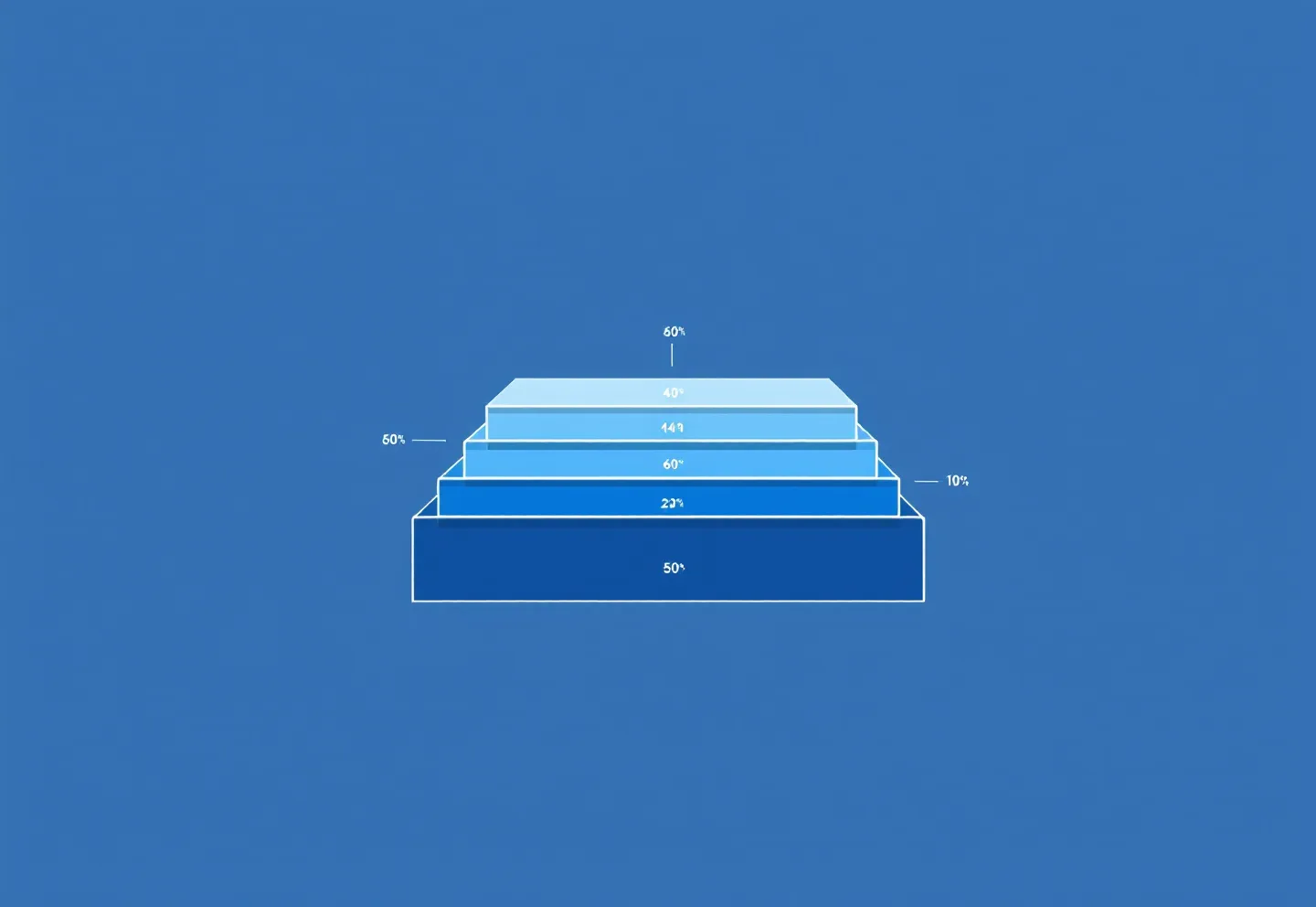
More of the bottle's weight comes from GHK-Cu than another ingredient. You don’t get proof of greater wound benefit from a larger weight. Below, you can see what the individual substances actually changed. Those findings don't yet predict healing when you receive all the ingredients.
What the 80 mg total tells you about the mixture’s contents
A vial (small glass bottle) usually holds 80 mg of dry contents. Milligrams measure weight, like ounces marked on a package. Labs dissolve the contents in water made to limit bacteria. Each weight below describes bottle contents, without establishing your treatment amount.
| Substance | Weight in the bottle | What separate studies examined |
|---|---|---|
| GHK-Cu | 50 mg (~62.5%) | Collagen (protein strengthening skin) and copper |
| BPC-157 | 10 mg (12.5%) | Repair and new blood vessels |
| TB-500 | 10 mg (12.5%) | Cells moving during healing |
| KPV | 10 mg (12.5%) | The body's inflammation response |
Most of the weight comes from GHK-Cu. The other ingredients bring their own effects and unknowns for you. These weights don't show how the ingredients interact inside you. Your benefit and safety need evidence beyond the amounts in a bottle.
KPV: what eased inflammation in mouse bowels
Mice drinking KPV had less severe bowel inflammation [3]. Tests also found less inflammation in gut-lining cells and immune cells from people. Immune cells help defend your body against infection. Those cell findings didn’t measure relief of bowel trouble like yours.
KPV copies the final amino acids (small protein parts), numbered 11–13, of alpha-MSH, a hormone carrying messages. Cells from inflamed gut lining took up KPV more readily. At about 160 micromoles per liter (a measure counting tiny particles, rather than weighing them), KPV entered at half the cells' fastest rate [3]. That measured entry speed, without establishing how much treats your symptoms.
The mice drank water containing KPV at 100 micromoles per liter. A liter is the amount held by a familiar large water bottle. The strongest evidence concerns bowels, leaving other injured parts less tested. KPV lacks approved human use or a comparison trial establishing relief for you.
GHK-Cu: what skin treatment improved in women
GHK-Cu on skin increased collagen production in 70% of women [4]. Collagen is protein that helps give skin strength. The share was 50% with vitamin C and 40% with retinoic acid, which is a skin medicine related to vitamin A. Those shares count women with increases, without showing each increase's size.
GHK was first separated from blood by Loren Pickart in 1973 [4]. At age 20, blood held about 200 nanograms per milliliter (tiny weights in much less liquid than a teaspoon). Researchers found about 80 nanograms per milliliter of GHK at age 60. This doesn't show what the lower amount meant for healing.
Copper joins GHK to form GHK-Cu, also called Copper Tripeptide-1. A GHK particle has one copper particle attached, written as 1:1. Copper helps the body strengthen collagen [4]. Those studies treated skin directly, without proving what a shot does for your skin.
Cell tests also found changes in genes (instructions stored in DNA) [5]. Genes help cells make the proteins needed for building and repair. Test liquid held 1–10 nanomoles per liter (a measure counting tiny particles, rather than their weight). These cell changes didn't show visible healing in a person.
Other changes concerned skin support, worn-out protein removal and DNA repair. GHK-Cu supplies 50 mg, about 62.5% of the bottle's weight. Skin studies found less sagging and fewer fine wrinkles. Your benefit from the injected mixture still hasn't been established.
BPC-157: what repaired animal tendons, and what FDA still questions
Rats' tendons healed better [2] and reattached to bone better [9]. Your tendon links muscle with bone to allow movement. Rat knee ligaments (bands holding joint bones together) also healed better [10]. Tendon cells grew, moved and survived better in dishes [11], without establishing your recovery.
BPC-157 contains 15 amino acids (small pieces joined to make protein). Researchers made a copy of a protein part in stomach fluid, named PL 14736. The tests also found more cell parts that receive growth-hormone messages. Growth hormone helps the body grow and repair itself.
Those receiving parts could make cells more responsive to the hormone. The finding didn't mean there was more hormone. Tests also found growth of new blood vessels. These cell changes don't measure your pain or injury repair.
Half the BPC-157 left animals' bodies in less than 30 minutes [8]. Muscle shots put 14–19% into rats' blood and 45–51% into dogs' blood. The shares measure what reached blood, without showing how much repaired injury. Animals broke the substance into smaller protein pieces.
The usual bottle contains ten mg of this ingredient. FDA's page current as of April 22, 2026 no longer lists this ingredient in Category 2, its group of possible serious safety concerns. The people seeking review for pharmacy-made medicines withdrew their requests. That ended those requests, without granting approval for your use.
FDA still warns about safety concerns for this ingredient. The page doesn't settle whether pharmacies may make medicines with it after the requests were withdrawn. A withdrawal doesn't mean a medicine was recalled from patients. You still lack proof of safety or FDA approval.
TB-500: what the full body protein’s wound tests can’t prove
Whole thymosin β4 helped rat wounds gain skin faster in 1999 [1]. Coverage rose 42% at 4 days and 61% at 7 days. More open wound surface had gained new skin. Skin cells given 10 trillionths of a gram showed 2–3-fold more movement, meaning two to three times as many moved [1].
Thymosin beta-4 is a protein made within the body. TB-500 copies a shorter piece of that protein. The full protein also helped repair cells near the heart move. Researchers haven't shown every full-protein effect for the short piece.
The copied piece relates to cells moving during repair. That gives a reason to investigate the ingredient before relying on your mixture. It doesn't establish healing or safety for you. Full-protein wound findings can't supply that missing proof.
WADA sets rules for drugs in sport and bans thymosin beta-4. The ban applies during events and between events. TB-500 comes from thymosin beta-4, so KLOW raises sports testing concerns. Your bottle’s ten mg share hasn’t been established as a safe human amount.
What unequal removal speeds leave unproved about your treatment
A 2022 study found animals cleared half their BPC-157 before 30 minutes [8]. Smaller KPV and GHK-Cu pieces are described as clearing faster. Human tests haven't measured how long TB-500 stays in the body. Receiving the ingredients together doesn't make their removal times equal.
The klow stack therefore has unsettled questions about timing. A repair change could last after an ingredient has left. An inflammation change could last for a different time in your body. Researchers haven't proved that those effects overlap to help your injury.
You don’t have proof of the ingredients reaching their highest blood levels together. Researchers need to test what happens inside the body after the mixture. You can't tell that from the bottle's weights alone. Your combined benefit and safety need their own comparisons.